
Hypospadias: Why the Opening Is in the Wrong Place, and the Right Age to Repair It

Published 11 Oct 2026 · Updated 11 Oct 2026 · 7 min read

The doctor has noticed that the urine opening on your baby boy’s penis is not at the tip, or that his foreskin looks like a hood. This is hypospadias, one of the most common conditions boys are born with. This guide explains what it is, why circumcision must wait, the right age for surgery, and what recovery involves.
In this article
What is hypospadias?
Normally, the opening through which urine comes out (the meatus*) sits at the tip of the penis. In hypospadias, this opening is on the underside of the penis instead. It may be just below the tip, along the shaft, or, less commonly, near or on the scrotum.
Hypospadias often comes with two other features: the foreskin is incomplete underneath, so it looks like a hood sitting on top, and the penis may bend downward, which is called chordee. It is one of the most common conditions boys are born with, and it is not caused by anything the parents did.
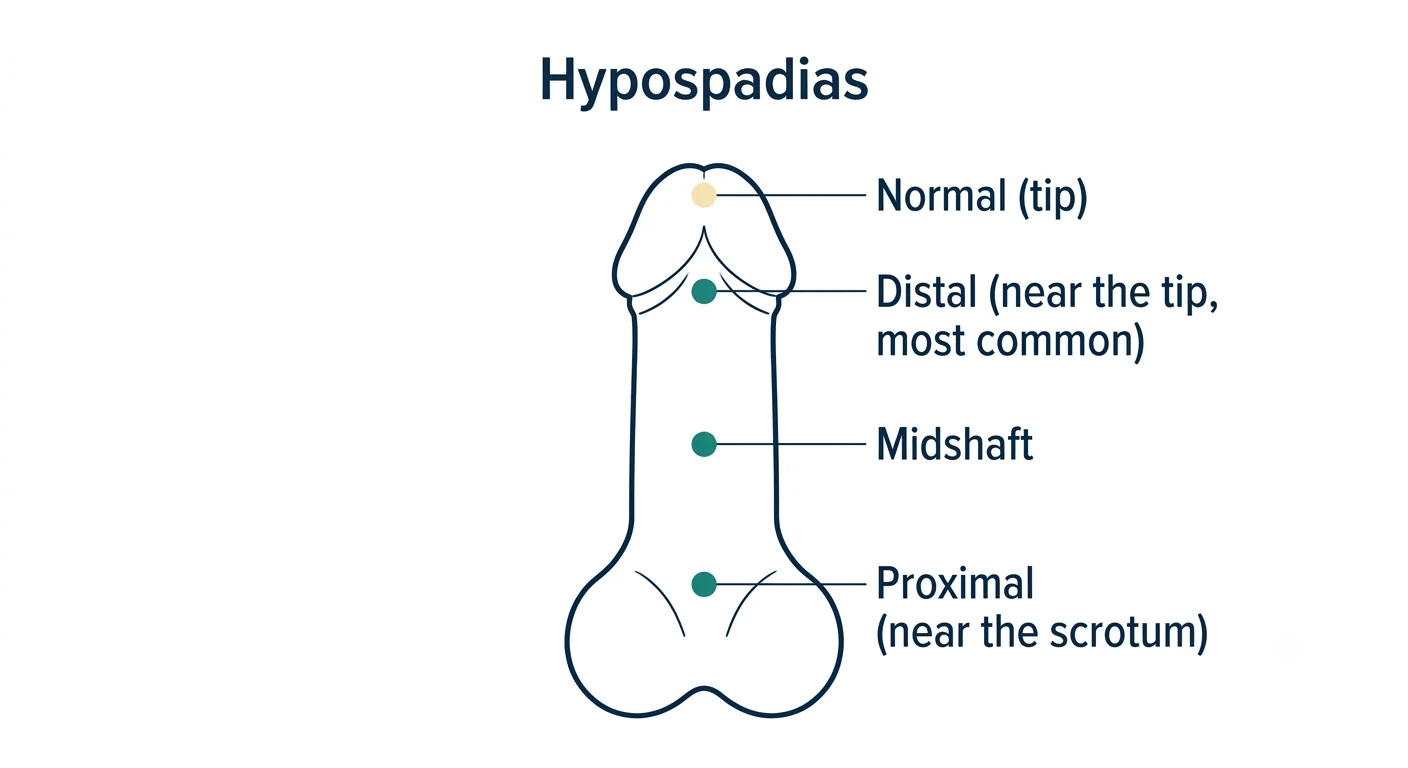
- Distal hypospadias (opening near the tip) is the most common type.
- Proximal hypospadias (opening further down) is less common, needs more detailed planning, and sometimes needs extra tests.
- The type decides the operation, not whether your son can live a normal life.
How do parents notice?
Hypospadias is usually noticed at birth by the paediatrician. Sometimes parents notice it first:
- the foreskin looks like a hood, open on the underside
- the urine opening is below the tip
- the urine stream sprays or goes downward
- the penis bends downward during erections, which even babies have
In one variant, the foreskin looks completely normal, and the hypospadias is found only when the foreskin is pulled back, sometimes during a circumcision. If this happens, the circumcision should be stopped, and your son should be seen by a paediatric surgeon or urologist.
When should you see a paediatric surgeon?
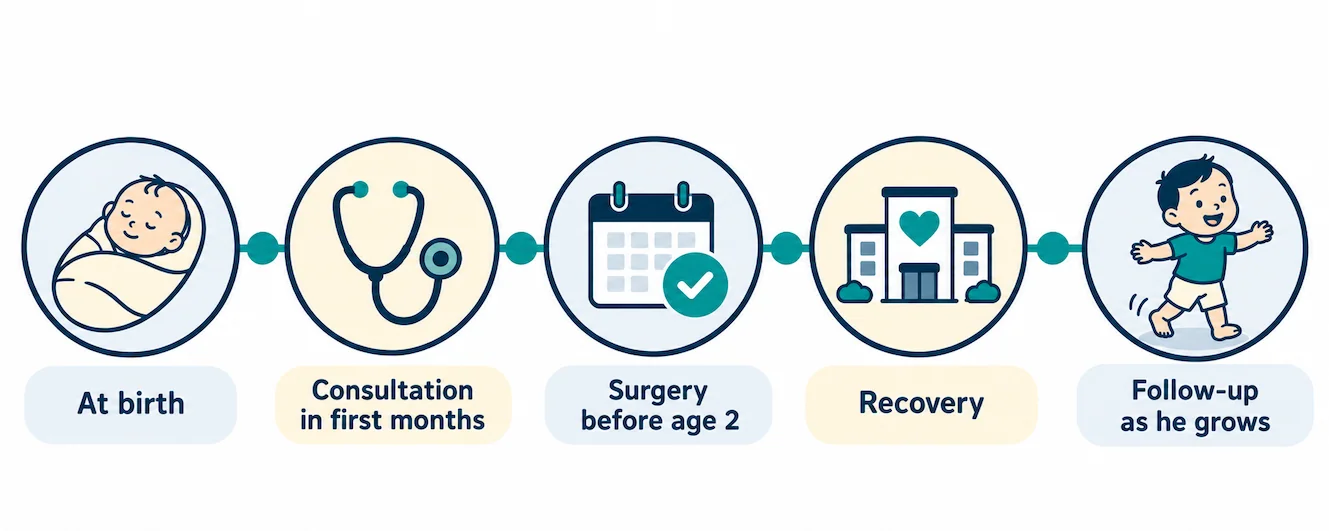
In the first few months of life. Early consultation gives you time to understand your son’s type of hypospadias and to plan surgery within the recommended age window, without rushing.
Within days, when:
- The opening is far down (near or on the scrotum) and one or both testes cannot be felt. This combination needs early evaluation, including blood tests, to fully understand your baby’s development.
- Your baby strains to pass urine, or urine comes only in drops
- You are unsure whether your baby’s genitals look typical
Don’t wait until school age. Surgery is usually done between 6 months and 2 years, so the first consultation should happen well before that.
How is it diagnosed?
Hypospadias is diagnosed by examination. The surgeon notes where the opening is, how the foreskin looks, whether the penis bends, how the scrotum looks, and whether both testes are in place.
Most boys with distal hypospadias need no tests at all. Blood tests (including chromosome and hormone tests) and an ultrasound are needed mainly when the hypospadias is proximal, especially when one or both testes are undescended, or when the genitals look atypical in other ways.
The final assessment of the opening’s position and degree of bend is sometimes made in the operating theatre under anaesthesia, when the tissues can be fully examined.
Treatment and the right age for it
Hypospadias is treated with surgery, called hypospadias repair or urethroplasty. It is usually done between 6 months and 2 years of age. In this period, anaesthesia is well tolerated, the tissues heal well, and the repair is completed before your son becomes aware of his genitals.
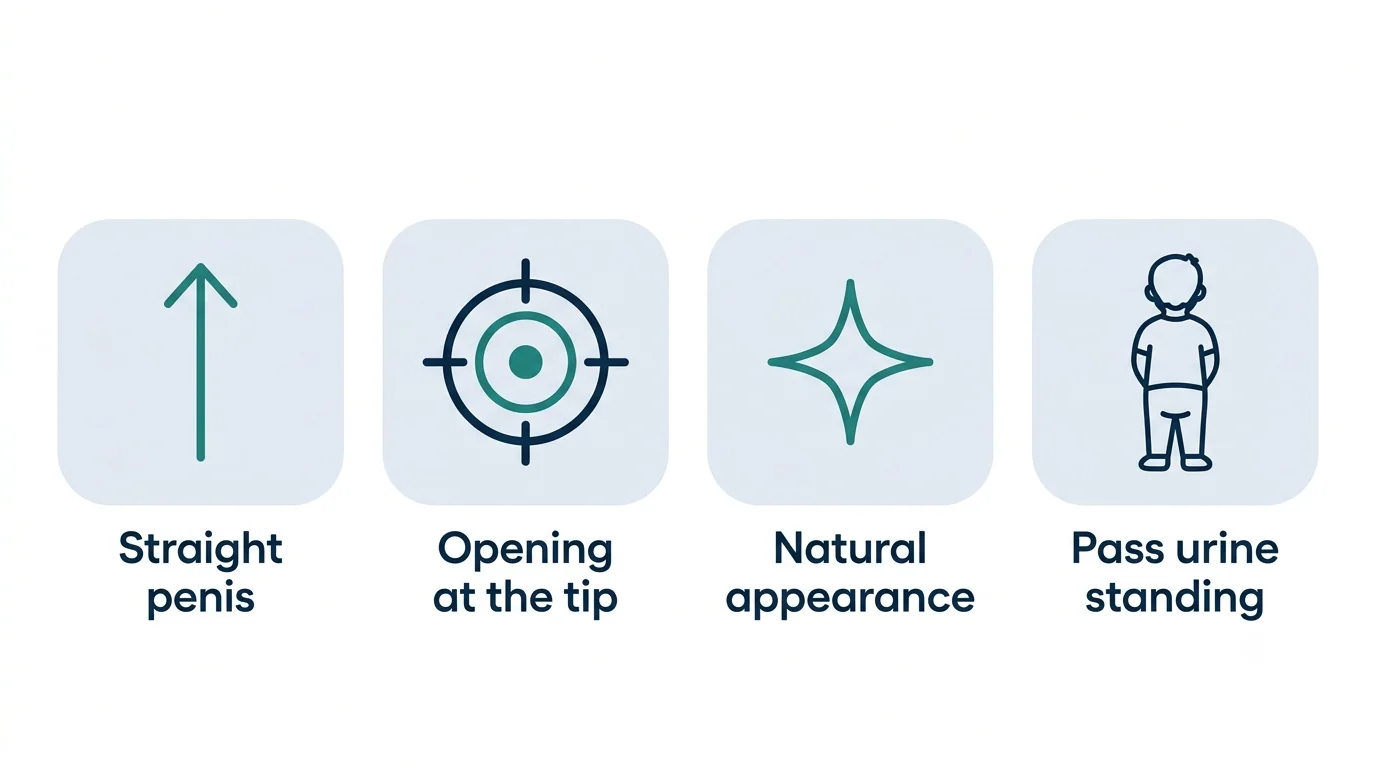
How the repair works. The operation straightens the penis if it bends, builds a new channel so that the opening comes to the tip, and reshapes the foreskin and skin for a natural appearance. Most distal forms are repaired in one operation. Some proximal forms are repaired in two stages, about six months apart. Occasionally, doctors give hormone treatment before surgery to help the tissues grow.
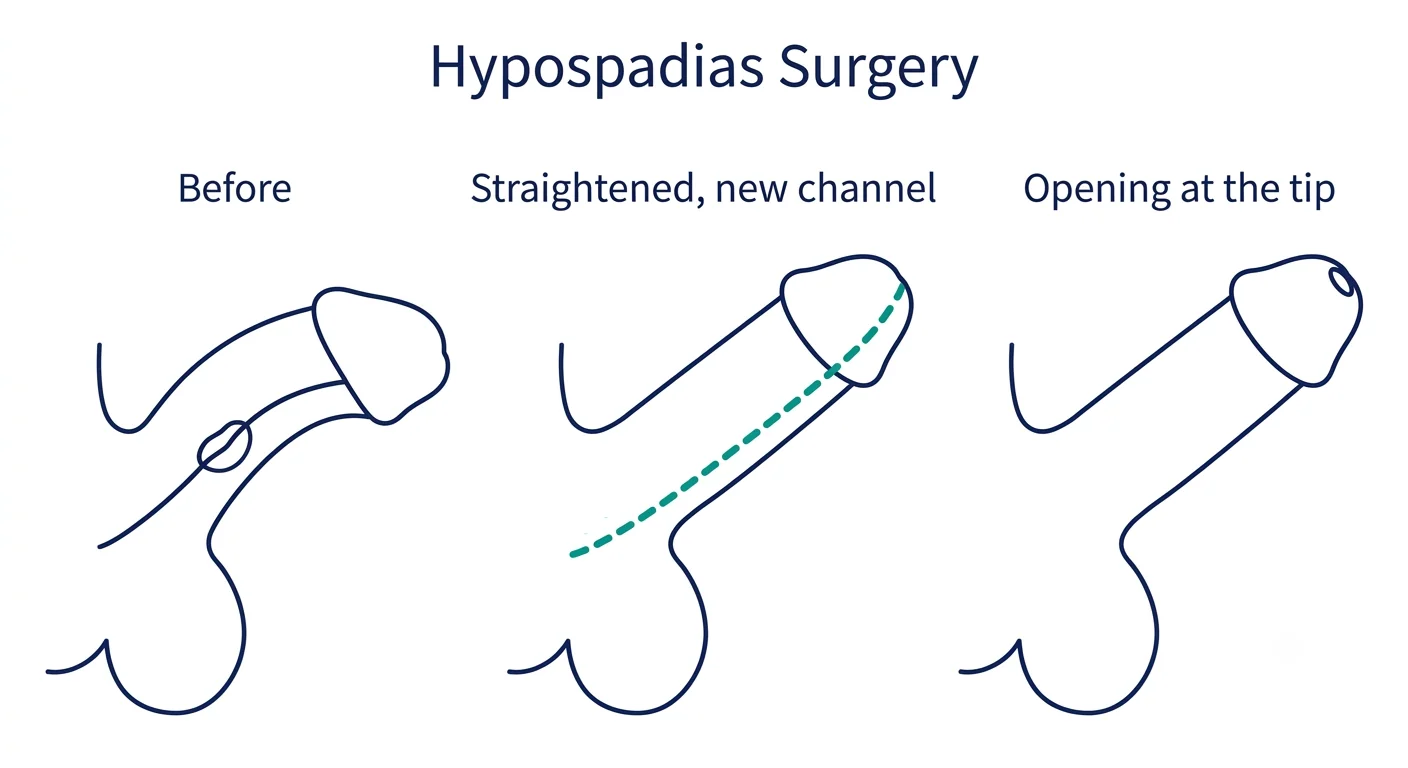
On the day, the operation is done under general anaesthesia, usually with a numbing injection near the tailbone (caudal block) for comfort afterwards. Your son goes home with a dressing and a small tube (catheter) that drains urine into the nappy.
Like any operation, hypospadias repair has risks. The most common is a small leak of urine from a second opening (fistula), or a narrowing of the new opening. These may need a further minor procedure. Your surgeon will discuss what applies to your son’s type of hypospadias.
Recovery at home
The catheter usually stays for about 5–10 days. Urine drains into the nappy, and many families use a double-nappy method: the catheter passes into an outer nappy, so the inner nappy catches stool and the outer one catches urine.
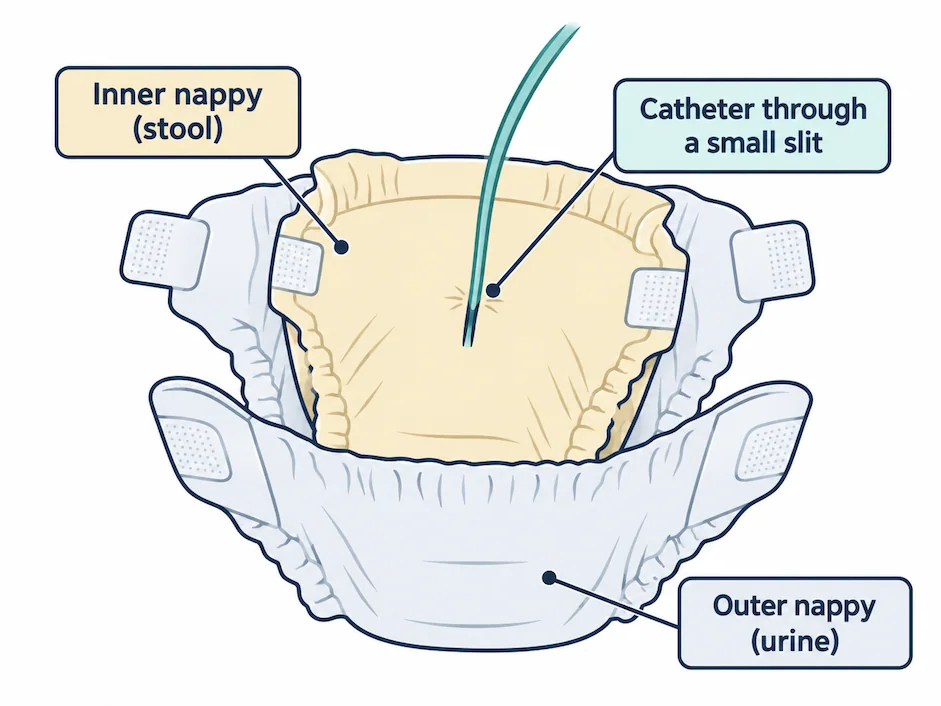
Comfort and care: give pain relief and antibiotics as prescribed. Keep the dressing clean and dry until it is removed at the clinic. Your son can return to normal feeding and gentle play, but avoid straddle toys (ride-on toys, walkers) for about 3–4 weeks. Some swelling and bruising is expected at first.
Follow-up continues as your son grows, to check his stream and appearance, ideally until after puberty.
The bottom line If your son’s foreskin looks hooded or the opening is not at the tip, don’t circumcise; get him examined. Plan the repair before 2 years of age, for a straight penis and an opening at the tip. Book a consultation with a pediatric surgeon for an examination and a surgical plan.
Frequently asked questions
References
- EAU/ESPU Guidelines on Paediatric Urology: Hypospadias. European Association of Urology, current edition.
- American Academy of Pediatrics. Timing of elective surgery on the genitalia of male children with particular reference to the risks, benefits, and psychological effects of surgery and anesthesia. Pediatrics. 1996;97(4):590–594.
- Snodgrass W. Tubularized, incised plate urethroplasty for distal hypospadias. J Urol. 1994;151(2):464–465.
- Lee PA, et al. Global disorders of sex development update since 2006: perceptions, approach and care. Horm Res Paediatr. 2016;85(3):158–180.
Have a question about your child?
This article is for general education and does not replace a clinical examination. Every child's condition is different — please consult a qualified paediatric surgeon for advice specific to your child.
Helpful next reads for parents.
Parent Guide
Is Pediatric Surgery Safe? What Every Parent Should Know
A reassuring guide for parents on why modern pediatric surgery is highly safe, how risks are managed, and how families can support the best outcome.
Read related guidePaediatric Urology
"The Scan Shows a Swollen Kidney" - A Parent's Guide to Antenatal Hydronephrosis
Your pregnancy scan report mentions hydronephrosis, pyelectasis or an "APD" measurement, and you're worried about your baby's kidney. This guide explains what the finding means, why most babies do well, and which steps after birth determine whether your baby needs any treatment at all.
Read related guideNewborn Surgery
Your Baby's Anomaly Scan Found a Problem - Planning Delivery and Care Before Birth
The anomaly scan has shown a problem in your baby, and the next few weeks feel uncertain. Many of these conditions can be treated with surgery after birth, and finding them early gives you time to plan. This guide explains the tests that follow, where to deliver, and why meeting a paediatric surgeon before birth helps.
Read related guide